We all have three eyes. Two for looking out and one for looking in. Why
would we want to look in when everything is happening 'out there'? Because
the treasure we seek is inside, not outside. What is treasure? Beauty,
truth, peace, happiness. You already have what you seek. You already are
stunningly beautiful. You are already peaceful and loving. How come you
don't know this? Simple, you never look inwards, beyond superficial memories
or recent experiences, so you never see your own riches. Take a moment to
stop, look in and see. Don't rush. Don't search. Just look. And be aware.
(Give peace to your love inside, u'll be great till
end..*!*.)
Monday, March 27, 2006

Dog's life
A butcher watching over his shop is really surprised when he sees a dog coming inside the shop. He shoos him away. But later, the dog is back again. So, he goes over to the dog and notices it has a note in its mouth.
He takes the note and it reads "Can I have 12 sausages and a leg of lamb, please? The dog has money in its mouth, as well."
The butcher looks inside and, lo and behold, there is a ten dollar note there. So he takes the money and puts the sausages and lamb in a bag, placing it in the dog's mouth. The butcher is so impressed, and since it's about closing time, he decides to shut the shop and follow the dog.
So off he goes. The dog is walking down the street, when it comes to a level crossing; the dog puts down the bag, jumps up and presses the button. Then it waits patiently, bag in mouth, for the lights to turn. They do, and it walks across the road, with the butcher following him all the way.
The dog then comes to a bus stop, and starts looking at the timetable. The butcher is in awe as the dog stops a bus by pulling its left leg up and gets in it. The butcher follows the dog into the bus. The dog then shows a ticket which is tied to its belt to the bus conductor. The butcher is nearly fainting at this sight, so are the other passengers in the bus. The dog then sits near the driver's seat looking outside. As soon as the stop is in sight, the dog stands and wags its tail to inform the conductor. Then, without waiting for the bus to stop completely, it jumps out of the bus and runs to a house very close to the stop.
It opens the big Iron Gate and rushes inside towards the door. As it approaches the wooden door, the dog suddenly changes its mind and heads towards the garden. It goes to the window, and beats its head against it several times, walks back, jumps off, and waits at the door. The butcher watches as a big guy opens the door, and starts abusing the dog, kicking him and punching him, and swearing at him. The butcher surprised with this, runs up, and stops the guy.
"What in heaven's name are you doing? The dog is a genius. He could be on TV, for the life of me! "To which the guy responds: "You call this clever? This is the second time this week that this stupid dog's forgotten his key."
Moral of the story.....
You may continue to exceed onlookers expectations but shall always fall short of the boss' expectations.
It's a dog's life after all.....
He takes the note and it reads "Can I have 12 sausages and a leg of lamb, please? The dog has money in its mouth, as well."
The butcher looks inside and, lo and behold, there is a ten dollar note there. So he takes the money and puts the sausages and lamb in a bag, placing it in the dog's mouth. The butcher is so impressed, and since it's about closing time, he decides to shut the shop and follow the dog.
So off he goes. The dog is walking down the street, when it comes to a level crossing; the dog puts down the bag, jumps up and presses the button. Then it waits patiently, bag in mouth, for the lights to turn. They do, and it walks across the road, with the butcher following him all the way.
The dog then comes to a bus stop, and starts looking at the timetable. The butcher is in awe as the dog stops a bus by pulling its left leg up and gets in it. The butcher follows the dog into the bus. The dog then shows a ticket which is tied to its belt to the bus conductor. The butcher is nearly fainting at this sight, so are the other passengers in the bus. The dog then sits near the driver's seat looking outside. As soon as the stop is in sight, the dog stands and wags its tail to inform the conductor. Then, without waiting for the bus to stop completely, it jumps out of the bus and runs to a house very close to the stop.
It opens the big Iron Gate and rushes inside towards the door. As it approaches the wooden door, the dog suddenly changes its mind and heads towards the garden. It goes to the window, and beats its head against it several times, walks back, jumps off, and waits at the door. The butcher watches as a big guy opens the door, and starts abusing the dog, kicking him and punching him, and swearing at him. The butcher surprised with this, runs up, and stops the guy.
"What in heaven's name are you doing? The dog is a genius. He could be on TV, for the life of me! "To which the guy responds: "You call this clever? This is the second time this week that this stupid dog's forgotten his key."
Moral of the story.....
You may continue to exceed onlookers expectations but shall always fall short of the boss' expectations.
It's a dog's life after all.....
Decision Making
10 Steps To Better Decision Making
Considering The Possibilities
1. Making a difficult choice can seem harrowing when you feel you're working alone. Involve others in your decision making by asking for criticism and seeking advice from those who can approach the choice from a fresh perspective. Listen to opinions that fall on both sides of the topic at hand. You may also want to consult an expert.
2. Learn from your mistakes as well as your triumphs. Examine decisions you have made in the past as they will teach you more than you will learn from most other sources. Though some decisions will not seem important, all decisions shape our lives and should be regarded as educational. Apply that knowledge to your current dilemma.
3. A good decision acted upon in a timely matter is always better than a great one acted upon too late. It is important to recognize that you will never know enough to make the perfect decision. Don't become paralyzed by your need to foresee all possible outcomes to every possible choice.
4. Involve your head and your heart. Ask both practical questions and personal questions about the problem at hand. Considering the facts as well as your feelings (and the feelings of others) when examining your options will ensure that you make a balanced decision.
5. Before anything else, focus on the most basic, necessary results. Often, a decision maker will get bogged down thinking about the non-essential elements of a decision. Avoid considering extraneous factors and far-fetched perfect outcomes. Ask yourself, "What needs to be done?"
6. Consider the entire range of possibilities, no matter how unlikely. When faced with a complex decision, brainstorm by yourself or with others to find as many of the vital elements as possible. Evaluate those elements as they relate to the choice you must make.
7. It was a wise person who noted that, "you can't please all of the people all of the time." Almost all decisions will involve some dissatisfaction or conflict. Some decisions may even create new problems. Once you have made a decision, stand by it. Keep in mind that you have used your best judgment and it was the best choice at the time.
8. Don't waste time on poor choices. Reject poor choices, even if you've begun to implement them, and stop doing the things that aren't working, so you can focus on the solutions that have strong potential.
9. Consult with the people who will be directly affected by your decision. People appreciate being heard and enjoy when their opinions are seen as valuable. Even making a simple choice can have a profound impact on those around you.
10. It is easy to dismiss your intuition, but in doing so, you may be disregarding valuable insight and even solutions. Ask yourself what choices you would make if you weren't afraid and then see what your subconscious offers as an answer. Try to ignore the fear of error when consulting your "gut."
Considering The Possibilities
1. Making a difficult choice can seem harrowing when you feel you're working alone. Involve others in your decision making by asking for criticism and seeking advice from those who can approach the choice from a fresh perspective. Listen to opinions that fall on both sides of the topic at hand. You may also want to consult an expert.
2. Learn from your mistakes as well as your triumphs. Examine decisions you have made in the past as they will teach you more than you will learn from most other sources. Though some decisions will not seem important, all decisions shape our lives and should be regarded as educational. Apply that knowledge to your current dilemma.
3. A good decision acted upon in a timely matter is always better than a great one acted upon too late. It is important to recognize that you will never know enough to make the perfect decision. Don't become paralyzed by your need to foresee all possible outcomes to every possible choice.
4. Involve your head and your heart. Ask both practical questions and personal questions about the problem at hand. Considering the facts as well as your feelings (and the feelings of others) when examining your options will ensure that you make a balanced decision.
5. Before anything else, focus on the most basic, necessary results. Often, a decision maker will get bogged down thinking about the non-essential elements of a decision. Avoid considering extraneous factors and far-fetched perfect outcomes. Ask yourself, "What needs to be done?"
6. Consider the entire range of possibilities, no matter how unlikely. When faced with a complex decision, brainstorm by yourself or with others to find as many of the vital elements as possible. Evaluate those elements as they relate to the choice you must make.
7. It was a wise person who noted that, "you can't please all of the people all of the time." Almost all decisions will involve some dissatisfaction or conflict. Some decisions may even create new problems. Once you have made a decision, stand by it. Keep in mind that you have used your best judgment and it was the best choice at the time.
8. Don't waste time on poor choices. Reject poor choices, even if you've begun to implement them, and stop doing the things that aren't working, so you can focus on the solutions that have strong potential.
9. Consult with the people who will be directly affected by your decision. People appreciate being heard and enjoy when their opinions are seen as valuable. Even making a simple choice can have a profound impact on those around you.
10. It is easy to dismiss your intuition, but in doing so, you may be disregarding valuable insight and even solutions. Ask yourself what choices you would make if you weren't afraid and then see what your subconscious offers as an answer. Try to ignore the fear of error when consulting your "gut."
spirituality in the workplace
7 ways to spirituality in the workplace
You are a spiritual being, even at work! Use your intuitive awareness and natural empathy and kindness in the workplace and you will be amazed by the way that others respond. Show them that their contribution is important...
Spirituality is not something we should practice only when it suits us according to time and place.It should be cherished and cultivated wherever we go. And since we spend most of our time in the workplace, it is imperative that we take our spiritual values with us even where we work. These values are creativity, communication, respect, vision, partnership, energy and flexibility. All these seven are related, and all are important.
By spirituality, we mean expressing more humanity; it has no religious component or preference. This interpretation is important since each person has their own beliefs, which should be respected.
1. Be creative
Creativity includes the use of color, laughter and freedom to enhance productivity. Creativity is fun. When people enjoy what they do, they work much harder.
Creativity includes conscious efforts to see things differently, to break out of habits and outdated beliefs to find new ways of thinking, doing and being.
Suppression of creativity leads to violence - people are naturally creative. When they are forced to crush their creativity, its energy force turns to destructive release - their inherent humanity must express itself!
2. Communicate
Communication, communication, communication! This is the vehicle that allows people to work together. In our society, our learning process is based on learning to communicate with teachers and parents.
So when we come to the real world, this social conditioning leads us to resort to subterfuge - trying to figure out how to beat the system,gain extra favours, say the “popular” thing or to keep our views to ourselves rather than “rock the boat.”
We should change this mindset and express what we feel about without fear and let others know where we stand. It doesn’t matter your views should match your superiors. Your peers will respect you as a man with principles.
3. Respect your colleagues
Respect of self and of others includes: respect for the environment; other people’s personal privacy, their physical space and belongings; different viewpoints, philosophies, religion, gender, lifestyle, ethnic origin, physical ability, beliefs and personality.
When we learn to respect our peers, we accept their differences. We can learn to use those differences for our mutual benefit. For example, the person who can sit all day in front of a computer and be productive can help the person who works best by talking and moving around. Both functions are important. Rather than criticising the other for being different, we can learn how different people see the world. Lack of respect and acceptance lead to conflict and hostility.
4. Have a vision
Vision means seeing beyond the obvious - seeing the unseen. It is a trait used to describe leaders and entrepreneurs. Where does vision come from? For some people, it is an inborn trait. They have always seen things that others cannot see. And, having seen the vision, they head straight for it ! They follow their vision in spite of obstacles or non-believers.
5. Learn to be a partner
Partnership encompasses individual responsibility and trust that other people will perform according to their commitments for the good of the team and partners. Partnership accepts that different people have different viewpoints and beliefs; those differences are used as positive aspects for broadening the team experience.
Partnership encourages the female and male aspects of ourselves to work together, without either one over-ruling or dominating the other. Lack of partnership leads to isolation and unhealthy competition.
6. Be energetic
Very positive energy forces are released when people feel creative, have the freedom to express their opinions, and feel respect from their management and their peers. The opposite energy force creates hostile workplace situations.
Your contribution to the collective positive energy is using your own creativity, communicating well, having respect for others, adapting to changing situations, working well with others and enjoying what you do. Your contribution to the collective negative energy is withholding your talents, communicating without respect, fighting and arguing with others, resisting changes, creating tension with others and hating what you do.
7.Be flexible
Flexibility includes the ability to adapt to changing situations and allowing one’s own beliefs and habits to change as needed. Learning to see trends and prepare for them is one way of learning flexibility. Another is to learn about ourselves, our own strengths and our weaknesses.
Then, work to operate from our strength, allowing others to help us with our weaknesses.
BUILDING SPIRITUALITY IN THE WORKPLACE
Verbally recognize the value of individuals in all you do
• Get to know the people with whom you work and know what is important to them
• State your personal ethics and your beliefs clearly
• Support causes outside the business
• Encourage leaders to use value-based discretion in making decisions
• Demonstrate your own self-knowledge and spirituality in all your actions
• Do unto others as you would have them do unto you
You are a spiritual being, even at work! Use your intuitive awareness and natural empathy and kindness in the workplace and you will be amazed by the way that others respond. Show them that their contribution is important...
Spirituality is not something we should practice only when it suits us according to time and place.It should be cherished and cultivated wherever we go. And since we spend most of our time in the workplace, it is imperative that we take our spiritual values with us even where we work. These values are creativity, communication, respect, vision, partnership, energy and flexibility. All these seven are related, and all are important.
By spirituality, we mean expressing more humanity; it has no religious component or preference. This interpretation is important since each person has their own beliefs, which should be respected.
1. Be creative
Creativity includes the use of color, laughter and freedom to enhance productivity. Creativity is fun. When people enjoy what they do, they work much harder.
Creativity includes conscious efforts to see things differently, to break out of habits and outdated beliefs to find new ways of thinking, doing and being.
Suppression of creativity leads to violence - people are naturally creative. When they are forced to crush their creativity, its energy force turns to destructive release - their inherent humanity must express itself!
2. Communicate
Communication, communication, communication! This is the vehicle that allows people to work together. In our society, our learning process is based on learning to communicate with teachers and parents.
So when we come to the real world, this social conditioning leads us to resort to subterfuge - trying to figure out how to beat the system,gain extra favours, say the “popular” thing or to keep our views to ourselves rather than “rock the boat.”
We should change this mindset and express what we feel about without fear and let others know where we stand. It doesn’t matter your views should match your superiors. Your peers will respect you as a man with principles.
3. Respect your colleagues
Respect of self and of others includes: respect for the environment; other people’s personal privacy, their physical space and belongings; different viewpoints, philosophies, religion, gender, lifestyle, ethnic origin, physical ability, beliefs and personality.
When we learn to respect our peers, we accept their differences. We can learn to use those differences for our mutual benefit. For example, the person who can sit all day in front of a computer and be productive can help the person who works best by talking and moving around. Both functions are important. Rather than criticising the other for being different, we can learn how different people see the world. Lack of respect and acceptance lead to conflict and hostility.
4. Have a vision
Vision means seeing beyond the obvious - seeing the unseen. It is a trait used to describe leaders and entrepreneurs. Where does vision come from? For some people, it is an inborn trait. They have always seen things that others cannot see. And, having seen the vision, they head straight for it ! They follow their vision in spite of obstacles or non-believers.
5. Learn to be a partner
Partnership encompasses individual responsibility and trust that other people will perform according to their commitments for the good of the team and partners. Partnership accepts that different people have different viewpoints and beliefs; those differences are used as positive aspects for broadening the team experience.
Partnership encourages the female and male aspects of ourselves to work together, without either one over-ruling or dominating the other. Lack of partnership leads to isolation and unhealthy competition.
6. Be energetic
Very positive energy forces are released when people feel creative, have the freedom to express their opinions, and feel respect from their management and their peers. The opposite energy force creates hostile workplace situations.
Your contribution to the collective positive energy is using your own creativity, communicating well, having respect for others, adapting to changing situations, working well with others and enjoying what you do. Your contribution to the collective negative energy is withholding your talents, communicating without respect, fighting and arguing with others, resisting changes, creating tension with others and hating what you do.
7.Be flexible
Flexibility includes the ability to adapt to changing situations and allowing one’s own beliefs and habits to change as needed. Learning to see trends and prepare for them is one way of learning flexibility. Another is to learn about ourselves, our own strengths and our weaknesses.
Then, work to operate from our strength, allowing others to help us with our weaknesses.
BUILDING SPIRITUALITY IN THE WORKPLACE
Verbally recognize the value of individuals in all you do
• Get to know the people with whom you work and know what is important to them
• State your personal ethics and your beliefs clearly
• Support causes outside the business
• Encourage leaders to use value-based discretion in making decisions
• Demonstrate your own self-knowledge and spirituality in all your actions
• Do unto others as you would have them do unto you



A woman without her man is nothing
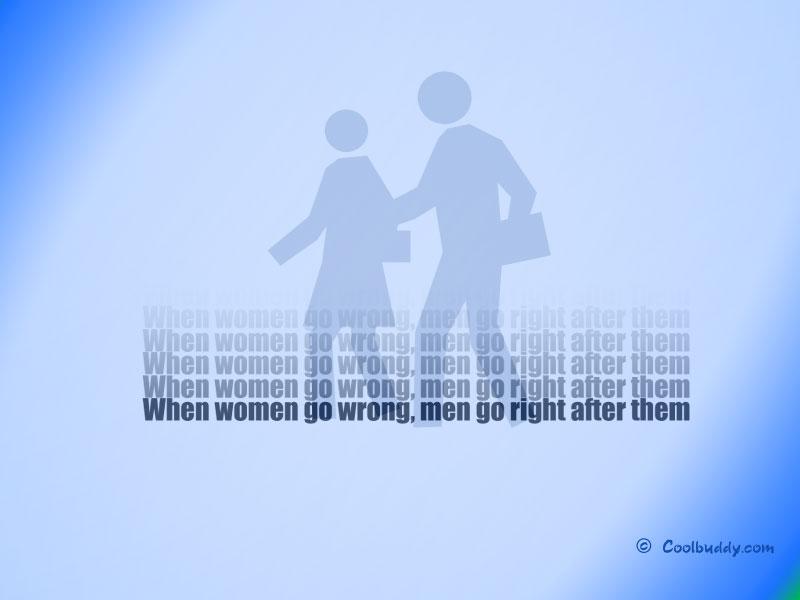
An English professor wrote the words: "A woman without her man is nothing" on the board and asked his students to punctuate it correctly.
All of the males in the class wrote: "A woman, without her man, is nothing."
All the females in the class wrote: "A woman: without her, man is nothing."
SEAT BELT PRIZE
(4 people in car, 2 in the front, one asleep in the back, one curled up in the trunk. Cop comes up behind with siren. They pull over. Cop walks to drivers window.)
DRIVER: What seems to be the problem, officer?
COP: No problem! I just wanted to tell you that you are the one hundredth person Ive seen wearing a seat belt today, which means you have won $5,000 in the statewide safety competition!
DRIVER: Thats great! What a surprise!
COP: So, buddy, what are you going to do with your winnings?
DRIVER: Well, first Ill get my drivers license and then Ill pay off all those warrants.
RIDER: Ah, dont believe him! He always talks big when hes drunk!
SLEEPER (waking up): Whoa! A cop. Darn it all! I knew we wouldnt get far in a stolen car.
GUY IN TRUNK: Hey! Amigos! Have we crossed the border yet?
All of the males in the class wrote: "A woman, without her man, is nothing."
All the females in the class wrote: "A woman: without her, man is nothing."
SEAT BELT PRIZE
(4 people in car, 2 in the front, one asleep in the back, one curled up in the trunk. Cop comes up behind with siren. They pull over. Cop walks to drivers window.)
DRIVER: What seems to be the problem, officer?
COP: No problem! I just wanted to tell you that you are the one hundredth person Ive seen wearing a seat belt today, which means you have won $5,000 in the statewide safety competition!
DRIVER: Thats great! What a surprise!
COP: So, buddy, what are you going to do with your winnings?
DRIVER: Well, first Ill get my drivers license and then Ill pay off all those warrants.
RIDER: Ah, dont believe him! He always talks big when hes drunk!
SLEEPER (waking up): Whoa! A cop. Darn it all! I knew we wouldnt get far in a stolen car.
GUY IN TRUNK: Hey! Amigos! Have we crossed the border yet?
quotes
1. As you get older three things happen. The first is your memory goes, and I
can't remember the other two... -- Sir Norman Wisdom
2. One of the most difficult things in the world is to convince a woman that
even a bargain costs money. -- Edgar Watson Howe
3. A true friend is one who overlooks your failures and tolerates your
success! -- Doug Larson
4. A harmful truth is always better then...a useful lie! -- Eric Bolton
5. When I was a kid I used to pray every night for a new bike. Then I realized
that The Lord doesn't work that way, so I stole one and asked him to forgive
me. -- Erno Philips
6. I only go to work on days that don't end in a 'y'. -- Robert Paul
7. We spend the first twelve months of our children's liv! es teaching them to
walk and talk and the next twelve telling them to sit down and shut up. -- Phyllis Diller
8. Laughter is the closest distance between two people. -- Victor Borge
9. Start every day with a smile and get it over with. -- W.C. Fields
10. Everything is funny as long as it is happening to somebody else. -- Will Rogers
11. Always get married early in the morning. That way, if it doesn't work out,
you haven't wasted a whole day. -- Mickey Rooney
12. Women now have choices. They can be married, not married, have a job, not
have a job, be married with children, unmarried with children. Men have the
same choice we've always had: work or prison. -- Tim Allen
13. If you never want to see a man again, say, 'I love you, I want to marry
you. I want to have children...' - they leave skid marks. -- Rita Rudner
14. I'm not afraid to die. I just don't want to be there when it happens. -- Woody Allen
15. Advice is what we ask for when we already know the answer but wish we
didn't. -- Erica Jong
16. Don't take life too seriously, you'll never get out of it alive. -- Elbert Hubbard
17. Always and never are two words you should always remember never to use. -- Wendell Johnson
18. In life, it's not who you know that's important, it's how your wife found
out. -- Joey Adams
19. I've been in love with the same woman for forty-one years. If my wife finds
out, she'll kill me. -- Henry Youngman
20. Have you noticed that all the people in favor of birth control are already
born ? -- Benny Hill
can't remember the other two... -- Sir Norman Wisdom
2. One of the most difficult things in the world is to convince a woman that
even a bargain costs money. -- Edgar Watson Howe
3. A true friend is one who overlooks your failures and tolerates your
success! -- Doug Larson
4. A harmful truth is always better then...a useful lie! -- Eric Bolton
5. When I was a kid I used to pray every night for a new bike. Then I realized
that The Lord doesn't work that way, so I stole one and asked him to forgive
me. -- Erno Philips
6. I only go to work on days that don't end in a 'y'. -- Robert Paul
7. We spend the first twelve months of our children's liv! es teaching them to
walk and talk and the next twelve telling them to sit down and shut up. -- Phyllis Diller
8. Laughter is the closest distance between two people. -- Victor Borge
9. Start every day with a smile and get it over with. -- W.C. Fields
10. Everything is funny as long as it is happening to somebody else. -- Will Rogers
11. Always get married early in the morning. That way, if it doesn't work out,
you haven't wasted a whole day. -- Mickey Rooney
12. Women now have choices. They can be married, not married, have a job, not
have a job, be married with children, unmarried with children. Men have the
same choice we've always had: work or prison. -- Tim Allen
13. If you never want to see a man again, say, 'I love you, I want to marry
you. I want to have children...' - they leave skid marks. -- Rita Rudner
14. I'm not afraid to die. I just don't want to be there when it happens. -- Woody Allen
15. Advice is what we ask for when we already know the answer but wish we
didn't. -- Erica Jong
16. Don't take life too seriously, you'll never get out of it alive. -- Elbert Hubbard
17. Always and never are two words you should always remember never to use. -- Wendell Johnson
18. In life, it's not who you know that's important, it's how your wife found
out. -- Joey Adams
19. I've been in love with the same woman for forty-one years. If my wife finds
out, she'll kill me. -- Henry Youngman
20. Have you noticed that all the people in favor of birth control are already
born ? -- Benny Hill
Girl's reply when you propose her
Here are the top most reply of a girl, when you propose her...
1) Nahi.................???
2) Chiiiii.....Kitne gande soch hai tumhare.......
3) Maine tumhe sirf ek acche dost ki nazar se dekha hai ....
4) Mera pehle se ek boyfrnd hai....
5 ) Main in baton pe vishwas nahi karti, apne padhai pe dhyaan lagao...
6) tum abhi tak mujhe jaante kahan ho ?Yeh shayad infatuation hai....
7) Tumhara bank balance kitna hai…??
8) Magar last year to maine tumhe raakhi baandhi thi ..hai naa..bhaiyya..??
9) Mein abhi is relation ke liye mentally prepared nahi hoo....
10) Mein apne dady se pooch ke tumhe kaal answer karu…??
11) Itni si baat kehne ke liye itni der lagaa di??
12) Ye donon ke dil me hai na, to phir kya kehna!!
13) Sorry
14) "……Apna chehra kabhi aayine me dekha hai….. L……………………………"
15) "Main toh tumhe apna Bhai maanati hu"
16) "Yes .. I too like you … (but hope you don't cheat on me ) " … (Which girls most oftenly do)
17) Phele kyon nahi bataya ab tum late ho gaye ..
18) Tum agar pehle mile hote to sochti.
19) Tumhari himmat kaise hui mere baare mein aisa sochne ki… (probably followed by a slap)
20) Girl: mujhe sochna ka wakt do…
Guy: kitna wakt???(with hope)
Girl: saat janam
21) Mai ek shaadi shuda ladki hu ;-)
22) Mein tumhare chotte bhai se pyaar karti hoon…
23) Now that's a real tragedy….
Girl: Hee hee ……hee hee hee…..hee ….hee……hee……
Hee hee ……hee hee hee…..hee ….hee……hee……
24) Boy: I love U!
Gal: I don't think abt all this before marriage.
25) Keep loving I don't care.
26) Tum mere liye kya kar sakte ho…
27) Kaun sa number hai mera tumhare proposals ki history mein.
Ha ha ha ha….
28) tumhe is nazar se kabhi dekha nahi
29) tumhare barre mein kabhi aisa socha nahi
30) mummy se pooch kar bataungi
31) mere bhaiyya se baat kar lo , who hi tumhe samajhayenge
32) Knyo, Tina ne "No" bola?
33) Lekin tum to Mina ke piche pade the, Kya usne thappad mara?
34) Kitne time ke liye -???
35) Worst one-- Jo bhi bolna hai jaldi bolo mera beta school se aata hoga..
36) Thanks. I love you, too.
37) Boy :- Sonya, I love U…..
Gal :- Sorry , Next 3 Months tak Waiting List chal rahi hai….
38) "What?"
39) "Let's just stay away from this"
40)
41)
42)' ' friend='""' ?s='""'>
44) My friend in college got one classic reply … "I THINK I'M ENGAGED"
45) "I think, I will have better options in future ..."
Mujhe tumse is baare mein koi baat nahi karni, then she starts ignoring, phir bhi nahi
sudhare then she threatens via some common friends.
46) My Boy friend is very short Tempered. Beware of it.
47) like you as a friend but I never thought about us like this…cant we be just good friends for ever
47) Actually my younger sis likes you a lot. ..
48) My mummy does not like your family (if the family knows each other.) ..
49) "Why me?..Tumne mere meih essa kya dekha?..."she wants you to list down all the Good qualities that you even might have not seen in her. ...
50) SLAP !! ACTIONS SPEAK LOUDER THAN WORDS....it is said ..
51)hehe I didnt expect that from you....
52)nice joke ...
53)tu ladke kuchh or nahi soch sakte jaha ladki dekhi fisl gaye.....
54)achha tum bhi meine socha sirf harsh,nikhil,ravi, etc etc ko hi mujhme interest hai
and then walks on.............
55)tumhe to purpose karna bhi nahi aata paheli bari hai kya koyi baat nahi mein batati hun...
1) Nahi.................???
2) Chiiiii.....Kitne gande soch hai tumhare.......
3) Maine tumhe sirf ek acche dost ki nazar se dekha hai ....
4) Mera pehle se ek boyfrnd hai....
5 ) Main in baton pe vishwas nahi karti, apne padhai pe dhyaan lagao...
6) tum abhi tak mujhe jaante kahan ho ?Yeh shayad infatuation hai....
7) Tumhara bank balance kitna hai…??
8) Magar last year to maine tumhe raakhi baandhi thi ..hai naa..bhaiyya..??
9) Mein abhi is relation ke liye mentally prepared nahi hoo....
10) Mein apne dady se pooch ke tumhe kaal answer karu…??
11) Itni si baat kehne ke liye itni der lagaa di??
12) Ye donon ke dil me hai na, to phir kya kehna!!
13) Sorry
14) "……Apna chehra kabhi aayine me dekha hai….. L……………………………"
15) "Main toh tumhe apna Bhai maanati hu"
16) "Yes .. I too like you … (but hope you don't cheat on me ) " … (Which girls most oftenly do)
17) Phele kyon nahi bataya ab tum late ho gaye ..
18) Tum agar pehle mile hote to sochti.
19) Tumhari himmat kaise hui mere baare mein aisa sochne ki… (probably followed by a slap)
20) Girl: mujhe sochna ka wakt do…
Guy: kitna wakt???(with hope)
Girl: saat janam
21) Mai ek shaadi shuda ladki hu ;-)
22) Mein tumhare chotte bhai se pyaar karti hoon…
23) Now that's a real tragedy….
Girl: Hee hee ……hee hee hee…..hee ….hee……hee……
Hee hee ……hee hee hee…..hee ….hee……hee……
24) Boy: I love U!
Gal: I don't think abt all this before marriage.
25) Keep loving I don't care.
26) Tum mere liye kya kar sakte ho…
27) Kaun sa number hai mera tumhare proposals ki history mein.
Ha ha ha ha….
28) tumhe is nazar se kabhi dekha nahi
29) tumhare barre mein kabhi aisa socha nahi
30) mummy se pooch kar bataungi
31) mere bhaiyya se baat kar lo , who hi tumhe samajhayenge
32) Knyo, Tina ne "No" bola?
33) Lekin tum to Mina ke piche pade the, Kya usne thappad mara?
34) Kitne time ke liye -???
35) Worst one-- Jo bhi bolna hai jaldi bolo mera beta school se aata hoga..
36) Thanks. I love you, too.
37) Boy :- Sonya, I love U…..
Gal :- Sorry , Next 3 Months tak Waiting List chal rahi hai….
38) "What?"
39) "Let's just stay away from this"
40)
41)
42)' ' friend='""' ?s='""'>
44) My friend in college got one classic reply … "I THINK I'M ENGAGED"
45) "I think, I will have better options in future ..."
Mujhe tumse is baare mein koi baat nahi karni, then she starts ignoring, phir bhi nahi
sudhare then she threatens via some common friends.
46) My Boy friend is very short Tempered. Beware of it.
47) like you as a friend but I never thought about us like this…cant we be just good friends for ever
47) Actually my younger sis likes you a lot. ..
48) My mummy does not like your family (if the family knows each other.) ..
49) "Why me?..Tumne mere meih essa kya dekha?..."she wants you to list down all the Good qualities that you even might have not seen in her. ...
50) SLAP !! ACTIONS SPEAK LOUDER THAN WORDS....it is said ..
51)hehe I didnt expect that from you....
52)nice joke ...
53)tu ladke kuchh or nahi soch sakte jaha ladki dekhi fisl gaye.....
54)achha tum bhi meine socha sirf harsh,nikhil,ravi, etc etc ko hi mujhme interest hai
and then walks on.............
55)tumhe to purpose karna bhi nahi aata paheli bari hai kya koyi baat nahi mein batati hun...
Definition of kiss
Prof .of Economics
Kiss is that thing for which the demand is aways higher than the supply.
Prof. of Accountancy
Kiss is a credit because it is profitable when returned.
Prof. of Algebra
Kiss is infinity because two divided by nothing.
Prof. of Geometry
Kiss is the shortest distance between two lips.
Prof. of Physics
Kiss is the contraction of mouth due to the expansion of the heart.
Prof. of Chemistry
Kiss is the reaction of the interaction between two hearts.
Prof. of Zoology
Kiss is the interchange of salivary bacteria.
Prof. of Physiology
Kiss is the juxtaposition of two orbicularisoris muscles in the state of contraction.
Prof. of Dentistry
Kiss is infectious and antiseptic.
Prof. of Philosophy
Kiss is the persecution for the child, ecstasy for the youth and homage for the old.
Prof. of English
Kiss is a noun that is used as a conjunction, it is more common than proper, it is spoken in the plural and it is applicable to all.
Prof. of Architecture
Kiss is a process which builds a solid bond between the two dynamic objects
Prof. of Comp.Science
What is a kiss? It seems to be an undefined variable
Kiss is that thing for which the demand is aways higher than the supply.
Prof. of Accountancy
Kiss is a credit because it is profitable when returned.
Prof. of Algebra
Kiss is infinity because two divided by nothing.
Prof. of Geometry
Kiss is the shortest distance between two lips.
Prof. of Physics
Kiss is the contraction of mouth due to the expansion of the heart.
Prof. of Chemistry
Kiss is the reaction of the interaction between two hearts.
Prof. of Zoology
Kiss is the interchange of salivary bacteria.
Prof. of Physiology
Kiss is the juxtaposition of two orbicularisoris muscles in the state of contraction.
Prof. of Dentistry
Kiss is infectious and antiseptic.
Prof. of Philosophy
Kiss is the persecution for the child, ecstasy for the youth and homage for the old.
Prof. of English
Kiss is a noun that is used as a conjunction, it is more common than proper, it is spoken in the plural and it is applicable to all.
Prof. of Architecture
Kiss is a process which builds a solid bond between the two dynamic objects
Prof. of Comp.Science
What is a kiss? It seems to be an undefined variable


Monday, March 13, 2006
weeekend relief
It was a relaxing weekend sponsored by DH. We had nice weekend at country club lake view. we were playing cricket, TT and some time in water. Nice lunch and little bit of drinks (Yes, i tasted some drink, i dont know the name, but it tasted like coke only)
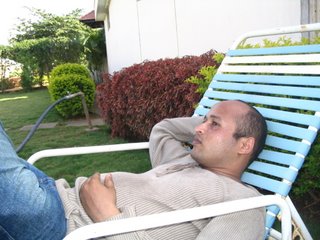
some more snaps on my photos blog
And then sunday was full of sleeping, because of the body pains.
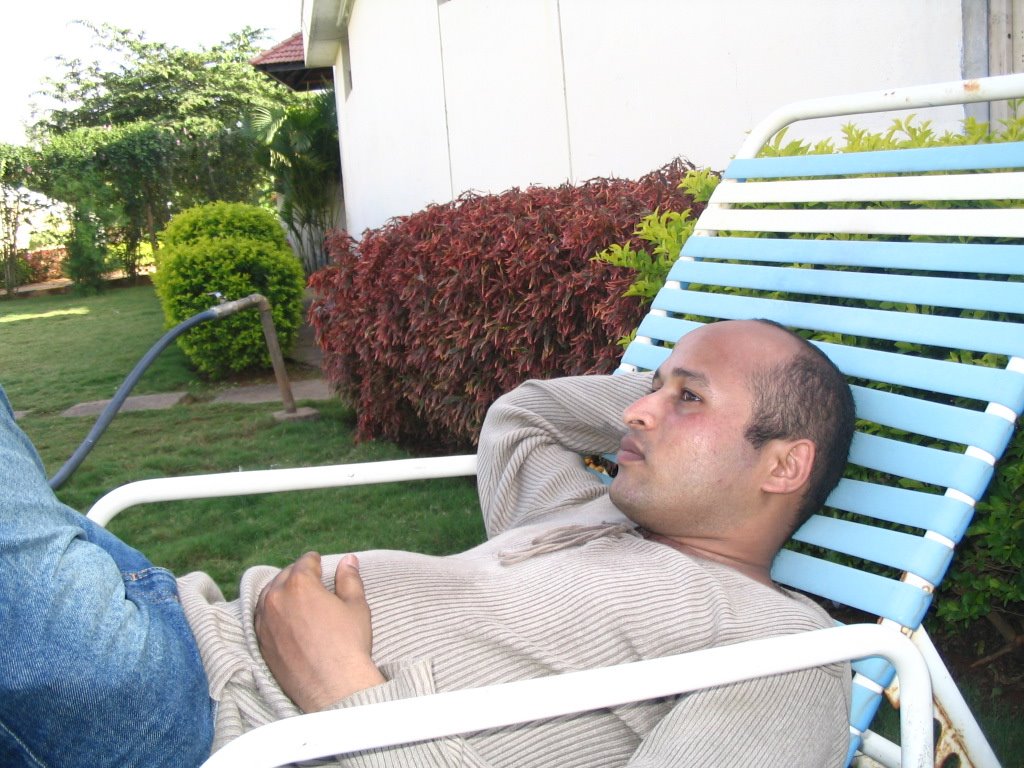
some more snaps on my photos blog
And then sunday was full of sleeping, because of the body pains.
Thursday, March 09, 2006
Monday, February 27, 2006
Stanford University story
A lady in a faded gingham dress and her husband,dressed in a homespun
threadbare suit, stepped off the train in Boston, and walked timidly
without an appointment into the outer office of the President of Harvard
University.
The secretary could tell in a moment that such backwoods, country hicks
had no business at Harvard and probably didn't even deserve to be in
Cambridge. She frowned. "We want to see the president," the man
said
softly. "He'll be busy all day," the secretary snapped.
"We'll wait," the
lady replied.
For hours, the secretary ignored them, hoping that the couple would
finally become discouraged and go away. They didn't. And the secretary
grew frustrated and finally decided to disturb the president, even though
it was a chore she always regretted to do. "Maybe if they just see you
for a few minutes, they'll leave," she told him. And he signed in
exasperation
and nodded. Someone of his importance obviously didn't have the time to
spend with them, but he detested gingham dresses and homespun suits
cluttering up his outer office.
The president, stern-faced with dignity, strutted toward the couple. The
lady told him, "We had a son that attended Harvard for one year. He
loved
Harvard. He was happy here. But about a year ago, he was accidentally
killed. And my husband and I would like to erect a memorial to him,
somewhere on campus." The president wasn't touched; he was shocked.
"Madam," he said gruffly, "We can't put up a statue for
every person who
attended Harvard and died. If we did,this place would look like a
cemetery." "Oh, no," the lady explained quickly, "We
don't want to erect
a statue. We thought we would like to give a building to Harvard."
The president rolled his eyes. He glanced at the gingham dress and homespun
suit, then exclaimed, "A building! Do you have any earthly idea how
much a building costs? We have over seven and a half million dollars in the
physical plant at Harvard."
For a moment the lady was silent. The president was pleased. He could get
rid of them now. And the lady turned to her husband and said quietly,
"Is that all it costs to start a University? Why don't we just start our own?"
Her husband nodded. The president's face wilted in confusion and bewilderment.
And Mr. and Mrs. Leland Stanford walked away, traveling to Palo Alto,
California, where they established the University that bears their name, a
memorial to a son that Harvard no longer cared about.
Today Stanford University is the Best in the World in Technical Education.
BETTER than The BEST.
Sometimes first impressions are wrong. Someone might look like a chunk of
gold, and quickly rust. Or we might turn away someone with drive,loyalty,
ambition, determination, etc. We hear that what goes around,comes around.
Just in case that might actually be true and in case you have ever felt
under appreciated, then you might consider taking advantage of the next
opportunity to look a little deeper for the goodness in others.
threadbare suit, stepped off the train in Boston, and walked timidly
without an appointment into the outer office of the President of Harvard
University.
The secretary could tell in a moment that such backwoods, country hicks
had no business at Harvard and probably didn't even deserve to be in
Cambridge. She frowned. "We want to see the president," the man
said
softly. "He'll be busy all day," the secretary snapped.
"We'll wait," the
lady replied.
For hours, the secretary ignored them, hoping that the couple would
finally become discouraged and go away. They didn't. And the secretary
grew frustrated and finally decided to disturb the president, even though
it was a chore she always regretted to do. "Maybe if they just see you
for a few minutes, they'll leave," she told him. And he signed in
exasperation
and nodded. Someone of his importance obviously didn't have the time to
spend with them, but he detested gingham dresses and homespun suits
cluttering up his outer office.
The president, stern-faced with dignity, strutted toward the couple. The
lady told him, "We had a son that attended Harvard for one year. He
loved
Harvard. He was happy here. But about a year ago, he was accidentally
killed. And my husband and I would like to erect a memorial to him,
somewhere on campus." The president wasn't touched; he was shocked.
"Madam," he said gruffly, "We can't put up a statue for
every person who
attended Harvard and died. If we did,this place would look like a
cemetery." "Oh, no," the lady explained quickly, "We
don't want to erect
a statue. We thought we would like to give a building to Harvard."
The president rolled his eyes. He glanced at the gingham dress and homespun
suit, then exclaimed, "A building! Do you have any earthly idea how
much a building costs? We have over seven and a half million dollars in the
physical plant at Harvard."
For a moment the lady was silent. The president was pleased. He could get
rid of them now. And the lady turned to her husband and said quietly,
"Is that all it costs to start a University? Why don't we just start our own?"
Her husband nodded. The president's face wilted in confusion and bewilderment.
And Mr. and Mrs. Leland Stanford walked away, traveling to Palo Alto,
California, where they established the University that bears their name, a
memorial to a son that Harvard no longer cared about.
Today Stanford University is the Best in the World in Technical Education.
BETTER than The BEST.
Sometimes first impressions are wrong. Someone might look like a chunk of
gold, and quickly rust. Or we might turn away someone with drive,loyalty,
ambition, determination, etc. We hear that what goes around,comes around.
Just in case that might actually be true and in case you have ever felt
under appreciated, then you might consider taking advantage of the next
opportunity to look a little deeper for the goodness in others.
LITTLE VITO ON MATH
A teacher asks her class, "If there are five birds sitting on a fence,
and you shoot one of them, how many will be left?" She calls on Little
Vito.
He replies, "None. They will all fly away with the first gunshot."
The teacher replies, "The correct answer is four, but I like your
thinking."
Then, Little Vito says, "I have a question for YOU. There are three
women sitting on a bench having ice cream: One is delicately licking the
sides of the ice cream. The second is gobbling down the top and sucking
the cone. The third is biting off the top of the ice cream. Which one is
married?"
The teacher, blushing a great deal, replied, "Well, I suppose the one
that's gobbled down the top and sucked the cone."
To which Little Vito replied, "The correct answer is 'the one with the
wedding ring on', but I like your thinking."
LITTLE VITO ON MATH
Little Vito returns from school, and he says he got an "F" in
arithmetic.
"Why?" asks Little Vito's father?
"The teacher asked me: 'How much is 2x3'?. I said ' 6," replies Little
Vito.
"But that's right!" says Little Vito's Dad.
"Yeah, but then she asked me: "How much is 3x2?'"
"What's the fucking difference?" asks Little Vito's father..
"That's what I said!"
LITTLE VITO ON ENGLISH
Little Vito goes to school, and the teacher says, "Today, we are going
to learn multi-syllable words, Class. Does anybody have an example of a
multi-syllable word?"
Little Vito says, "Mas-tur-bate."
Miss Rogers smiles and says, "Wow, Little Vito, that's a mouthful."
Little Vito says, "No, Miss Rogers. You're thinking of a blow-job."
LITTLE VITO ON GRAMMAR
Little Vito was sitting in class one day. All of a sudden, he needed to
go to the bathroom. He yelled out, "Miss Jones, I need to take a piss!!"
The teacher replied, "Now, VITO, that is NOT the proper word to use in
this situation. The correct word you want to use is 'urinate.' Please
use the word 'ur-i-nate' in a sentence correctly, and I will allow you
to go."
Little Vito, thinks for a bit, and then says, "You're an eight, but if
you had bigger tits, you'd be a TEN!"
LITTLE VITO ON MORE GRAMMAR
One day, during lessons on proper grammar, the teacher asked for a show
of hands from those who could use the word "beautiful" in the same
sentence twice correctly.
First, she called on little Suzie, who responded with, "My father bought
my mother a beautiful dress, and she looked beautiful in it"
"Very good, Suzie," replied the teacher. She then called on little
Michael. "My mommy planned a beautiful banquet, and it turned out
beautiful."
She said, "Excellent, Michael!"
Then the teacher reluctantly called on Little Vito. He said, "Last night
at the dinner table, my sister told my father that she was pregnant, and
he said, "Beautiful, just fucking beautiful".
LITTLE VITO ON GETTING OLDER
Little Vito was sitting on a park bench munching on one candy bar after
another. After the 6th one, a man on the bench across from him said to
him,
"Son, you know eating all that candy isn't good for you. It will give
you acne, rot your teeth, and make you fat."
Little Vito replied, "My grandfather lived to be 107 years old."
The man asked, "Did your grandfather eat 6 candy bars at a time?"
Little Vito answered, "No, He minded his own fucking business!
and you shoot one of them, how many will be left?" She calls on Little
Vito.
He replies, "None. They will all fly away with the first gunshot."
The teacher replies, "The correct answer is four, but I like your
thinking."
Then, Little Vito says, "I have a question for YOU. There are three
women sitting on a bench having ice cream: One is delicately licking the
sides of the ice cream. The second is gobbling down the top and sucking
the cone. The third is biting off the top of the ice cream. Which one is
married?"
The teacher, blushing a great deal, replied, "Well, I suppose the one
that's gobbled down the top and sucked the cone."
To which Little Vito replied, "The correct answer is 'the one with the
wedding ring on', but I like your thinking."
LITTLE VITO ON MATH
Little Vito returns from school, and he says he got an "F" in
arithmetic.
"Why?" asks Little Vito's father?
"The teacher asked me: 'How much is 2x3'?. I said ' 6," replies Little
Vito.
"But that's right!" says Little Vito's Dad.
"Yeah, but then she asked me: "How much is 3x2?'"
"What's the fucking difference?" asks Little Vito's father..
"That's what I said!"
LITTLE VITO ON ENGLISH
Little Vito goes to school, and the teacher says, "Today, we are going
to learn multi-syllable words, Class. Does anybody have an example of a
multi-syllable word?"
Little Vito says, "Mas-tur-bate."
Miss Rogers smiles and says, "Wow, Little Vito, that's a mouthful."
Little Vito says, "No, Miss Rogers. You're thinking of a blow-job."
LITTLE VITO ON GRAMMAR
Little Vito was sitting in class one day. All of a sudden, he needed to
go to the bathroom. He yelled out, "Miss Jones, I need to take a piss!!"
The teacher replied, "Now, VITO, that is NOT the proper word to use in
this situation. The correct word you want to use is 'urinate.' Please
use the word 'ur-i-nate' in a sentence correctly, and I will allow you
to go."
Little Vito, thinks for a bit, and then says, "You're an eight, but if
you had bigger tits, you'd be a TEN!"
LITTLE VITO ON MORE GRAMMAR
One day, during lessons on proper grammar, the teacher asked for a show
of hands from those who could use the word "beautiful" in the same
sentence twice correctly.
First, she called on little Suzie, who responded with, "My father bought
my mother a beautiful dress, and she looked beautiful in it"
"Very good, Suzie," replied the teacher. She then called on little
Michael. "My mommy planned a beautiful banquet, and it turned out
beautiful."
She said, "Excellent, Michael!"
Then the teacher reluctantly called on Little Vito. He said, "Last night
at the dinner table, my sister told my father that she was pregnant, and
he said, "Beautiful, just fucking beautiful".
LITTLE VITO ON GETTING OLDER
Little Vito was sitting on a park bench munching on one candy bar after
another. After the 6th one, a man on the bench across from him said to
him,
"Son, you know eating all that candy isn't good for you. It will give
you acne, rot your teeth, and make you fat."
Little Vito replied, "My grandfather lived to be 107 years old."
The man asked, "Did your grandfather eat 6 candy bars at a time?"
Little Vito answered, "No, He minded his own fucking business!
making her happy :-)
It's not difficult to make a woman happy.A man only needs to be:
1. a friend
2. a companion
3. a lover
4. a brother
5. a father
6. a master
7. a chef
8. an electrician
9. a carpenter
10. a plumber
11. a mechanic
12. a decorator
13. a stylist
14. a sexologist
15. a gynecologist
16. a psychologist
17. a pest exterminator
18. a psychiatrist
19. a healer
20. a good listener
21. an organizer
22. a good father
23. very clean
24. sympathetic
25. athletic
26. warm
27. attentive
28. gallant
29. intelligent
30. funny
31. creative
32. tender
33. strong
34. understanding
35. tolerant
36. prudent
37. ambitious
38. capable
39. courageous
40. determined
41. true
42. dependable
43. passionate
44. compassionate
WITHOUT FORGETTING TO:
45. give her compliments regularly
46. love shopping
47. be honest
48. be very rich
49. not stress her out
50. not look at other girls
AND AT THE SAME TIME, YOU MUST ALSO:
51. give her lots of attention, but expect little yourself.
52. give her lots of time, especially time for herself.
53. give her lots of space, never worrying about where she goes.
IT IS VERY IMPORTANT: 54. Never to forget:
* birthdays
* anniversaries
* arrangements she makes
HOW TO MAKE A GUY HAPPY:
1. Show up naked.
2. Bring food.
3. And beer.
1. a friend
2. a companion
3. a lover
4. a brother
5. a father
6. a master
7. a chef
8. an electrician
9. a carpenter
10. a plumber
11. a mechanic
12. a decorator
13. a stylist
14. a sexologist
15. a gynecologist
16. a psychologist
17. a pest exterminator
18. a psychiatrist
19. a healer
20. a good listener
21. an organizer
22. a good father
23. very clean
24. sympathetic
25. athletic
26. warm
27. attentive
28. gallant
29. intelligent
30. funny
31. creative
32. tender
33. strong
34. understanding
35. tolerant
36. prudent
37. ambitious
38. capable
39. courageous
40. determined
41. true
42. dependable
43. passionate
44. compassionate
WITHOUT FORGETTING TO:
45. give her compliments regularly
46. love shopping
47. be honest
48. be very rich
49. not stress her out
50. not look at other girls
AND AT THE SAME TIME, YOU MUST ALSO:
51. give her lots of attention, but expect little yourself.
52. give her lots of time, especially time for herself.
53. give her lots of space, never worrying about where she goes.
IT IS VERY IMPORTANT: 54. Never to forget:
* birthdays
* anniversaries
* arrangements she makes
HOW TO MAKE A GUY HAPPY:
1. Show up naked.
2. Bring food.
3. And beer.
Wednesday, February 15, 2006
The 90/10 Principle
The 90/10 Principle
Author: Stephen Covey
Discover the 90/10 Principle. It will change your life (at least the way you react to situations). What is this principle?
10% of life is made up of what happens to you. 90% of life is decided by how you react. What does this mean?
We really have no control over 10% of what happens to us. We cannot stop the car from breaking down. The plane will be late arriving, which throws our whole schedule off. A driver may cut us off in traffic. We have no control over this 10%. The other 90% is different. You determinethe other 90%.
How? By your reaction.
You cannot control a red light., but you can control your reaction. Don't let people fool you; YOU can control how you react. Let's use an example.
You are eating breakfast with your family. Your daughter knocks over a cup of coffee onto your business shirt. You have no control over what just happened. What happens next will be determined by how you react. You curse. You harshly scold your daughter for knocking the cup over. She breaks down in tears. After scolding her, you turn to your spouse and criticize her for placing the cup too close to the edge of the table. A short verbal battle follows. You storm upstairs and change your shirt. Back downstairs, you find your daughter has been too busy crying to finish breakfast and get ready for school. She misses the bus. Your spouse must leave immediately for work.
You rush to the car and drive your daughter to school. Because you are late, you drive 40 miles an hour in a 30 mph speed limit. After a 15-minute delay and throwing $60 traffic fine away, you arrive at school. Your daughter runs into the building without saying goodbye. After arriving at the office 20 minutes late, you find you forgot your briefcase.Your day has started terrible. As it continues, it seems to get worse and worse. You look forward to coming home, When you arrive home, you find small wedge in your relationship with your spouse and daughter.
Why? Because of how you reacted in the morning. Why did you have a bad day?
A) Did the coffee cause it?
B) Did your daughter cause it?
C) Did the policeman cause it?
D) Did you cause it?
The answer is " D".
You had no control over what happened with the coffee.How you reacted in those 5 seconds is what caused your bad day. Here is what could have and should have happened.
Coffee splashes over you. Your daughter is about to cry. You gently say, "It's ok honey, you just need, to be more careful next time".Grabbing a towel you rush upstairs. After grabbing a new shirt and your briefcase, you come back down in time to look through the window and see your child getting on the bus. She turns and waves. You arrive 5 minutes early and cheerfully greet the staff. Your boss comments on how good the day you are having.
Notice the difference?
Two different scenarios. Both started the same. Both ended different.Why? Because of how you REACTED.
You really do not have any control over 10% of what happens. The other
90% was determined by your reaction.
Here are some ways to apply the 90/10 principle.
If someone says something negative about you, don't be a sponge. Let the attack roll off like water on glass. You don't have to let the negative comment affect you! React properly and it will not ruin your day. A wrong reaction could result in losing a friend, being fired, getting stressed out etc.
How do you react if someone cuts you off in traffic? Do you lose your temper? Pound on the steering wheel? A friend of mine had the steering wheel fall off)
Do you curse? Does your blood pressure skyrocket? Do you try and bump them? WHO CARES if you arrive ten seconds later at work? Why let the cars ruin your drive? Remember the 90/10 principle, and do not worry about it.
You are told you lost your job. Why lose sleep and get irritated? It will work out. Use your worrying energy and time into finding another job. The plane is late; it is going to mangle your schedule for the day.Why take out your frustration on the flight attendant? She has no control over what is going on. Use your time to study, get to know the other passenger. Why get stressed out? It will just make things worse.
Now you know the 90-10 principle. Apply it and you will be amazed at the results. You will lose nothing if you try it. The 90-10 principle is incredible. Very few know and apply this principle.The result? Millions of people are suffering from undeserved stress, trials, problems and heartache.We all must understand and apply the 90/10 principle. It CAN change your life!!!
Author: Stephen Covey
Discover the 90/10 Principle. It will change your life (at least the way you react to situations). What is this principle?
10% of life is made up of what happens to you. 90% of life is decided by how you react. What does this mean?
We really have no control over 10% of what happens to us. We cannot stop the car from breaking down. The plane will be late arriving, which throws our whole schedule off. A driver may cut us off in traffic. We have no control over this 10%. The other 90% is different. You determinethe other 90%.
How? By your reaction.
You cannot control a red light., but you can control your reaction. Don't let people fool you; YOU can control how you react. Let's use an example.
You are eating breakfast with your family. Your daughter knocks over a cup of coffee onto your business shirt. You have no control over what just happened. What happens next will be determined by how you react. You curse. You harshly scold your daughter for knocking the cup over. She breaks down in tears. After scolding her, you turn to your spouse and criticize her for placing the cup too close to the edge of the table. A short verbal battle follows. You storm upstairs and change your shirt. Back downstairs, you find your daughter has been too busy crying to finish breakfast and get ready for school. She misses the bus. Your spouse must leave immediately for work.
You rush to the car and drive your daughter to school. Because you are late, you drive 40 miles an hour in a 30 mph speed limit. After a 15-minute delay and throwing $60 traffic fine away, you arrive at school. Your daughter runs into the building without saying goodbye. After arriving at the office 20 minutes late, you find you forgot your briefcase.Your day has started terrible. As it continues, it seems to get worse and worse. You look forward to coming home, When you arrive home, you find small wedge in your relationship with your spouse and daughter.
Why? Because of how you reacted in the morning. Why did you have a bad day?
A) Did the coffee cause it?
B) Did your daughter cause it?
C) Did the policeman cause it?
D) Did you cause it?
The answer is " D".
You had no control over what happened with the coffee.How you reacted in those 5 seconds is what caused your bad day. Here is what could have and should have happened.
Coffee splashes over you. Your daughter is about to cry. You gently say, "It's ok honey, you just need, to be more careful next time".Grabbing a towel you rush upstairs. After grabbing a new shirt and your briefcase, you come back down in time to look through the window and see your child getting on the bus. She turns and waves. You arrive 5 minutes early and cheerfully greet the staff. Your boss comments on how good the day you are having.
Notice the difference?
Two different scenarios. Both started the same. Both ended different.Why? Because of how you REACTED.
You really do not have any control over 10% of what happens. The other
90% was determined by your reaction.
Here are some ways to apply the 90/10 principle.
If someone says something negative about you, don't be a sponge. Let the attack roll off like water on glass. You don't have to let the negative comment affect you! React properly and it will not ruin your day. A wrong reaction could result in losing a friend, being fired, getting stressed out etc.
How do you react if someone cuts you off in traffic? Do you lose your temper? Pound on the steering wheel? A friend of mine had the steering wheel fall off)
Do you curse? Does your blood pressure skyrocket? Do you try and bump them? WHO CARES if you arrive ten seconds later at work? Why let the cars ruin your drive? Remember the 90/10 principle, and do not worry about it.
You are told you lost your job. Why lose sleep and get irritated? It will work out. Use your worrying energy and time into finding another job. The plane is late; it is going to mangle your schedule for the day.Why take out your frustration on the flight attendant? She has no control over what is going on. Use your time to study, get to know the other passenger. Why get stressed out? It will just make things worse.
Now you know the 90-10 principle. Apply it and you will be amazed at the results. You will lose nothing if you try it. The 90-10 principle is incredible. Very few know and apply this principle.The result? Millions of people are suffering from undeserved stress, trials, problems and heartache.We all must understand and apply the 90/10 principle. It CAN change your life!!!
Monday, February 13, 2006
how they got their names!
ABN AMRO- In the 1960s, the Nederlandse Handelmaatschappij (Dutch Trading Society; 1824) and the Twentsche Bank merged to form the Algemene Bank Nederland ( ABN; General Bank of the Netherlands). In 1966, the Amsterdamsche Bank and the Rotterdamsche Bank merged to form the Amro Bank. In 1991, ABNand Amro Bank merged to form ABN AMRO.
Accenture- Accent on the Future. Greater-than 'accent' over the logo's t points forward towards the future. The name Accenture was proposed by a company employee in Norwayas part of a internal name finding process (BrandStorming). Prior to January 1, 2001 the company was called Andersen Consulting.
Adidas- from the name of the founder Adolf (Adi) Dassler.
Adobe- came from name of the river Adobe Creek that ran behind the houses of founders John Warnock and Chuck Geschke .
AltaVista- Spanish for "high view".
Amazon.com - Founder Jeff Bezos renamed the company to Amazon (from the earlier name of Cadabra.com) after the world's most voluminous river, the Amazon. He saw the potential for a larger volume of sales in an online bookstore as opposed to the then prevalent bookstores. (Alternative: It is said that Jeff Bezos named his book store Amazon simply to cash in on the popularity of Yahoo at the time. Yahoo listed entries alphabetically, and thus Amazon would always appear above its competitors in the relevant categories it was listed in.)
AMD- Advanced Micro Devices.
Apache- The name was chosen from respect for the Native American Indian tribe of Apache (Indé), well-known for their superior skills in warfare strategy and their inexhaustible endurance. Secondarily, and more popularly (though incorrectly) accepted, it's considered a cute name that stuck: its founders got started by applying patches to code written for NCSA's httpd daemon. The result was 'a patchy' server â" thus the name Apache.
Apple- for the favourite fruit of co-founder Steve Jobs and/or for the time he worked at an apple orchard. He was three months late in filing a name for the business, and he threatened to call his company Apple Computer if his colleagues didn't suggest a better name by 5 p.m. Apple's Macintosh is named after a popular variety of apple sold in the US. Apple also wanted to distance itself from the cold, unapproachable, complicated imagery created by the other computer companies at the time had names like IBM, NEC, DEC, ADPAC, Cincom, Dylakor, Input, Integral Systems, SAP, PSDI, Syncsort and Tesseract. The new company sought to reverse the entrenched view of computers in order to get people to use them at home. They looked for a name that was unlike the names of traditional computer companies, a name that also supported a brand positioning strategy that was to be perceived as simple, warm, human, approachable and different. Note: Apple had to get approval from the Beatle's Apple Corps to use the name 'Apple' and paid a one-time royalty of $100,000 to McIntosh Laboratory, Inc., a maker of high-end audio equipment, to use the derivative name 'Macintosh', known now as just 'Mac'.
AT&T- American Telephone and Telegraph Corporation officially changed its name to AT&T in the 1990s.
Bauknecht- Founded as an electrotechnical workshop in 1919 by Gottlob Bauknecht .
BBC- Stands for British Broadcasting Corporation.
BenQ- Bringing ENjoyment and Quality to life
Blaupunkt- Blaupunkt (Blue dot) was founded in 1923 under the name Ideal. Their core business was the manufacturing of headphones. If the headphones came through quality tests, the company would give the headphones a blue dot. The headphones quickly became known as the blue dots or blaue Punkte. The quality symbol would become a trademark, and the trademark would become the company name in 1938.
BMW- abbreviation of Bayerische Motoren Werke (Bavarian Motor Factories)
Borealis - The Northern Lights or Aurora Borealis, is the celestial phenomenon that features bursts of light in colourful patterns dancing across the night skies of the north. Borealis, inspired from the shining brilliance of the Northern Lights, was formed in 1994 out of the merger between two northern oil companies, Norway's Statoil and Finland's Neste.
BP - formerly British Petroleum, now "BP" (The slogan "Beyond Petroleum" has incorrectly been taken to refer to the company's new name following its rebranding effort in 2000).
BRAC- abbreviation for Bangladesh Rural Advancement Committee, world's largest NGO (non governmental organization). It works in development programs around the world.
Bridgestone- named after founder Shojiro Ishibashi. The surname Ishibashi (??) means "stone bridge", i.e. "bridge of stone".
Bull- Compagnie des machines Bull was founded in Paristo exploit the patents for punched card machines taken out by a Norwegian engineer, Fredrik Rosing Bull.
Cadillac- Cadillac was named after the 18th century French explorer Antoine Laumet de La Mothe , sieur de Cadillac, founder of Detroit, Michigan. Cadillac is a small town in the South of France.
Canon- Originally (1933) Precision Optical Instruments Laboratory the new name (1935) derived from the name of the company's first camera, the Kwannon, in turn named after the Japanese name of the Buddhist bodhisattva of mercy.
CGI- from the first letter of Information Management Consultant in french (Conseiller en Gestion et Informatique).
Cisco- short for San Francisco. It has also been suggested that it was "CIS-co" -- Computer Information Services was the department at StanfordUniversitythat the founders worked in.
COBRA- Computadores Brasileiros, "Brazilian Computers", electronics and services company, was the first state-owned designer and producer of computers in the 1970s, later acquired by the Banco do Brasil.
Coca-Cola- Coca-Cola's name is derived from the coca leaves and kola nuts used as flavoring. Coca-Cola creator John S. Pemberton changed the 'K' of kola to 'C' for the name to look better.
Colgate-Palmolive- formed from a merger of soap manufacturers Colgate & Company and Palmolive-Peet. Peet was dropped in 1953. Colgate was named after WilliamColgate, an English immigrant, who set up a starch, soap and candle business in New York Cityin 1806. Palmolive was named for the two oils (Palm and Olive) used in its manufacture.
Compaq- from "comp" for computer, and "pack" to denote a small integral object; or: Compatibility And Quality; or: from the company's first product, the very compact Compaq Portable.
Comsat - an American digital telecommunications and satellite company, founded during the President Kennedy era to develop the technology. Contraction of Communications Satellites.
Daewoo- the company founder Kim Woo Chong called it Daewoo which means "Great Universe" in Korean.
Dell- named after its founder, Michael Dell. The company changed its name from Dell Computer in 2003.
DHL- the company was founded by Adrian Dalsey, Larry Hillblom , and Robert Lynn , whose last initials form the company's moniker.
eBay- Pierre Omidyar, who had created the Auction Web trading website, had formed a web consulting concern called Echo Bay Technology Group. " EchoBay" didn't refer to the town in Nevada, the nature area close to Lake Mead, or any real place. "It just sounded cool," Omidyar reportedly said. When he tried to register EchoBay.com, though, he found that Echo Bay Mines, a gold mining company, had gotten it first. So, Omidyar registered what (at the time) he thought was the second best name: eBay.com.
Epson - Epson Seiko Corporation, the Japanese printer and peripheral manufacturer, was named from "Son of Electronic Printer"
Fanta- was originally invented by Max Keith in Germanyin 1940 when World War II made it difficult to get the Coca-Cola syrup to Nazi Germany. Fanta was originally made from byproducts of cheese and jam production. The name comes from the German word for imagination (Fantasie or Phantasie), because the inventors thought that imagination was needed to taste oranges from the strange mix.
Fazer - named after its founder, Karl Fazer.
Fiat- acronym of Fabbrica Italiana Automobili Torino (Italian Factory of Cars of Turin).
Fuji- from the highest Japanese mountain Mount Fuji.
Google- the name is an intentional misspelling of the word googol, reflecting the company's mission to organize the immense amount of information available online.
Haier- Chinese ? "sea" and ? (a transliteration character; also means "you" in Literary Chinese)
HP- Bill Hewlett and Dave Packard tossed a coin to decide whether the company they founded would be called Hewlett-Packard or Packard-Hewlett.
Hitachi- old place name, literally "sunrise"
Honda- from the name of its founder, Soichiro Honda
Honeywell- from the name of Mark Honeywell founder of Honeywell Heating Specialty Co. It later merged with Minneapolis Heat Regulator Company and was finally called Honeywell Inc. in 1963.
Hotmail- Founder Jack Smith got the idea of accessing e-mail via the web from a computer anywhere in the world. When Sabeer Bhatia came up with the business plan for the mail service, he tried all kinds of names ending in 'mail' and finally settled for Hotmail as it included the letters "HTML" - the markup language used to write web pages. It was initially referred to as HoTMaiL with selective upper casing. (If you click on Hotmail's 'mail' tab, you will still find "HoTMaiL" in the URL.)
HSBC- The Hongkong and Shanghai Banking Corporation.
Hyundai- connotes the sense of "the present age" or "modernity" in Korean.
IBM- named by Tom Watson, an ex-employee of National Cash Register. To one-up them in all respects, he called his company International Business Machines.
ICL- abbreviation for International Computers Ltd, once the UK's largest computer company, but now a service arm of Fujitsu, of Japan.
IKON - copier company name derived from I Know One Name.
Intel- Bob Noyce and Gordon Moore initially incorporated their company as N M Electronics. Someone suggested Moore Noyce Electronics but it sounded too close to "more noise" -- not a good choice for an electronics company! Later, Integrated Electronics was proposed but it had been taken by somebody else. Then, using initial syllables from INTegrated ELectronics, Noyce and Moore came up with Intel. To avoid potential conflicts with other companies of similar names, Intel purchased the name rights for $15,000 from a company called Intelco. (Source: Intel 15 Years Corporate Anniversary Brochure)
Interland - a web hosting provider formally known as Micron Computer, Inc. which was named either after InternetLandor the combination of the largest acqusition it performed, Interliant with the word Land.
Kawasaki- from the name of its founder, Shozo Kawasaki
Kodak- Both the Kodak camera and the name were the invention of founder George Eastman . The letter "K" was a favourite with Eastman; he felt it a strong and incisive letter. He tried out various combinations of words starting and ending with "K". He saw three advantages in the name. It had the merits of a trademark word, would not be mis-pronounced and the name did not resemble anything in the art. There is a misconception that the name was chosen because of its similarity to the sound produced by the shutter of the camera.
Konica- it was earlier known as Konishiroku Kogaku. Konishiroku in turn is the short for Konishiya Rokubeiten which was the first name of the company established by Rokusaburo Sugiura in the 1850s.
Korg - Formed from the surnames of the founders, Tsutomu Katoh and Tadashi Osanai, combined with the letters "rg" from the word organ.
LG- combination of two popular Korean brands Lucky and Goldstar. (In Mexicopublicists explained the name change to the public as an abbreviation to LÃnea Goldstar Spanish for Goldstar Line)
L'Oréal- In 1907, Eugène Schueller, a young French chemist, developed an innovative hair-color formula. He called his improved hair dye Auréole.
Lotus Software- Mitch Kapor got the name for his company from 'The Lotus Position' or 'Padmasana'. Kapor used to be a teacher of Transcendental Meditation technique as taught by Maharishi Mahesh Yogi.
Lucent Technologies- a spin-off from AT&T, it was named Lucent (meaning "luminous" or "glowing with light") because "light as a metaphor for visionary thinking reflected the company's operating and guiding business philosophy," according to the Landor Associates staff who chose the name. Source: Design Management Journal 8:1 (Winter 1997).
Lycos- from Lycosidae, the family of wolf spiders.
Mazda Motor- from the company's first president, Jujiro Matsuda . In Japanese, no syllables are ever stressed and some inner syllables are virtually skipped. Thus, Matsuda is pronounced "Matsda". To make the name fly better outside of Japan, the spelling was changed to Mazda.
McDonald's- from the name of the brothers Dick McDonald and Mac McDonald, who founded the first McDonald 's restaurant in 1940.
Mercedes- This is the first name of the daughter of Emil Jellinek, who worked for the early Daimler company around 1900.
MGM- Metro-Goldwyn-Mayer was formed by the merger of three picture houses Metro Picture Corporation, Goldwyn Pictures Corporation and Louis B. Mayer Pictures. Goldwyn Picture Corporation in turn was named after the last names of Samuel Goldfish and Edgar and Archibald Selwyn.
Micron- computer memory producer named after the microscopic parts of its products. The official name was Micron Computer, Inc. Since, the company has become Interland, a web hosting provider, after selling/spinning off its RAM division and closing down its computer division, licensing the name. The company is now headquartered in Atlanta.
Microsoft- coined by Bill Gates to represent the company that was devoted to MICROcomputer SOFTware. Originally christened Micro-Soft, the '-' was removed later on.
midPhase- the post-dotcom era gave using the .com in a companies official name untrendy. A new dotcom company may be named traditionally, in midPhase's case it was named midPhase Services, Inc., the midPhase stands for Middle Phase, or middle of the road.
Mitsubishi- The name Mitsubishi (??) has two parts: mitsu means three and hishi (changing to bishi in the middle of the word) means water chestnut, and from here rhombus, which is reflected in the company's logo.
Motorola- Founder Paul Galvin came up with this name when his company (at the time, Galvin Manufacturing Company) started manufacturing radios for cars. Many audio equipment makers of the era used the " ola" ending for their products, most famously the "Victrola" phonograph made by the Victor Talking Machine Company. The name was meant to convey the idea of "sound" and "motion". The name became so recognized that the company later adopted it as the company name.
Mozilla Foundation- from the name of the web-browser that preceded Netscape Navigator. When Marc Andreesen , founder of Netscape, created a browser to replace the Mosaic browser, it was internally named Mozilla (Mosaic-Killer, Godzilla) by Jamie Zawinski.
MRF- Madras Rubber Factory, founded by K M Mammen Mappillai in 1946. He started with a toy balloon-manufacturing unit at Tiruvottiyur, Chennai (then called Madras). In 1952, he began manufacturing tread-rubber, and in 1961, tyres.
Nero - Nero Burning ROM named after Nero burning Rome.
Netscape- named by first marketing employee Greg Sands, in a panic when the Universityof Illinoisthreatened to sue the new company for its original name, Mosaic. Netscape then paid Landor $50,000 to design a logo.
Nike- named for the Greek goddess of victory.
Nikon - the original name was Nippon Kogaku, meaning "Japanese Optical".
Nissan- the company was earlier known by the name Nippon Sangyo which means "Japanese industry".
Nokia- started as a wood-pulp mill, the company expanded into producing rubber products in the Finnish city of Nokia. The company later adopted the city's name.
Nortel - The Nortel Networks name came from Nortel (Northern Telecom) and Bay Networks. The company was originally spun off from the Bell Telephone Company of Canada Ltd in 1895 as Northern Electric and Manufacturing, and traded as Northern Electric from 1914 to 1976.
Novartis- after the Latin _expression "novae artes" which means something like "new skills".
Oracle - Larry Ellison, Ed Oates and Bob Miner were working on a consulting project for the CIA (Central Intelligence Agency). The code name for the project was Oracle (the CIA saw this as the system to give answers to all questions or some such). The project was designed to help use the newly written SQL database language from IBM. The project eventually was terminated but they decided to finish what they started and bring it to the world. They kept the name Oracle and created the RDBMS engine. Later they changed the name of the company, Relational Technology Inc, to the name of the product.
Pepsi- Pepsi derives its name from (treatment of) dyspepsia, an intestinal ailment.
Philips - Royal Philips Electronics was founded in 1891, by brothers Gerard (the engineer) and Anton (the entrepreneur) Philips .
Qantas- From its original name, Queensland And Northern Territory Aerial Services.
Red Hat- Company founder Marc Ewing was given the Cornell lacrosse team cap (with red and white stripes) while at college by his grandfather. People would turn to him to solve their problems, and he was referred to as 'that guy in the red hat'. He lost the cap and had to search for it desperately. The manual of the beta version of Red Hat Linux had an appeal to readers to return his Red Hat if found by anyone.
Reebok- another spelling of rhebok (Pelea capreolus), an African antelope.
SAAB- founded in 1937 in Swedenas "Svenska Aeroplan aktiebolaget" (Swedish Aeroplane Company) abbreviated SAAB.
Samsonite- Samsonite was launched as a brand in 1941, receiving its name from the Biblical character Samson, renowned for his strength.
Samsung- meaning three stars in Korean.
Sanyo- The Japanese translation is disputed, although the Chinese name is "??" (literally, "Three Oceans")
SAP- "Systems, Applications, Products in Data Processing", formerly "SystemAnalyse und Programmentwicklung" (German for "System analysis and program development"), formed by 4 ex- IBM employees who used to work in the 'Systems/Applications/Projects' group of IBM.
SEGA- "Service Games of Japan" (SeGa) Founded by Marty Bromley (an American) to import pinball games to Japanfor use on American military bases.
Sharp- Japanese consumer electronics company named from its first product, an ever-sharp pencil.
Shell- Royal Dutch Shell was established in 1907, when the Royal Netherlands Petrol Society Plc. and the Shell Transport and Trading Company Ltd. merged. The Shell Transport and Trading Company Ltd. had been established at the end of the 19th century, by commercial firm Samuel & Co (founded in 1830). Samuel & Co were already successfully importing Japanese shells when they set up an oil company, so the oil company was named after the shells Samuel & Co were importing.
Siemens - founded in 1847 by Werner von Siemens and Johann Georg Halske: the company was originally called Telegraphen-Bau-Anstalt von Siemens & Halske.
Sprint- from its parent company, Southern Pacific Railroad INTernal Communications. Back in the day, pipelines and railroad tracks were the cheapest place to lay communications lines, as the right-of-way was already leased or owned.
Sun Microsystems- its founders designed their first workstation in their dorm at StanfordUniversity, and chose the name Stanford University Network for their product, hoping to sell it to the college. They didn't.
Suzuki- from the name of its founder, Michio Suzuki
Tesco- Founder Jack Cohen, who from 1919 sold groceries in the markets of the London East End, acquired a large shipment of tea from T. E. Stockwell and made new labels by using the first three letters of the supplier's name and the first two letters of his surname forming the word "TESCO".
Toshiba- was founded by the merger of consumer goods company Tokyo Denki (Tokyo Electric Co) and electrical firm Shibaura Seisaku-sho (Shibaura Engineering Works).
Toyota- from the founder's name Sakichi Toyoda. Initially called Toyeda, it was changed after a contest for a better-sounding name. The new name was written in katakana with eight strokes, a number that is considered lucky in Japan.
Unisys- made-up name for the company that resulted from the combination of two old mainframe computer companies, Burroughs and Sperry [Sperry Univac/Sperry Rand]. It "united" two incompatible ranges. Unisys was briefly the world's second-largest computer company, after IBM.
Verizon- A portmanteau of veritas (Latin for truth) and horizon.
Vodafone- is a multinational mobile phone operator with headquarters in the United Kingdom. Its name is made up of VOice, DAta, TeleFONE. Vodafone made the UK's first mobile call at a few minutes past midnight on the 1 January 1985.
Volvo- From the Latin word "volvo", which means "I roll". It was originally a name for a ball bearing being developed by SKF.
Xerox- The inventor, Chestor Carlson, named his product trying to say `dry' (as it was dry copying, markedly different from the then prevailing wet copying). The Greek root `xer' means dry.
Yahoo!- a "backronym" for Yet Another Hierarchical Officious Oracle. The word Yahoo was invented by Jonathan Swift and used in his book Gulliver's Travels. It represents a person who is repulsive in appearance action and is barely human. Yahoo! founders David Filo and Jerry Yang selected the name because they jokingly considered themselves yahoos
Accenture- Accent on the Future. Greater-than 'accent' over the logo's t points forward towards the future. The name Accenture was proposed by a company employee in Norwayas part of a internal name finding process (BrandStorming). Prior to January 1, 2001 the company was called Andersen Consulting.
Adidas- from the name of the founder Adolf (Adi) Dassler.
Adobe- came from name of the river Adobe Creek that ran behind the houses of founders John Warnock and Chuck Geschke .
AltaVista- Spanish for "high view".
Amazon.com - Founder Jeff Bezos renamed the company to Amazon (from the earlier name of Cadabra.com) after the world's most voluminous river, the Amazon. He saw the potential for a larger volume of sales in an online bookstore as opposed to the then prevalent bookstores. (Alternative: It is said that Jeff Bezos named his book store Amazon simply to cash in on the popularity of Yahoo at the time. Yahoo listed entries alphabetically, and thus Amazon would always appear above its competitors in the relevant categories it was listed in.)
AMD- Advanced Micro Devices.
Apache- The name was chosen from respect for the Native American Indian tribe of Apache (Indé), well-known for their superior skills in warfare strategy and their inexhaustible endurance. Secondarily, and more popularly (though incorrectly) accepted, it's considered a cute name that stuck: its founders got started by applying patches to code written for NCSA's httpd daemon. The result was 'a patchy' server â" thus the name Apache.
Apple- for the favourite fruit of co-founder Steve Jobs and/or for the time he worked at an apple orchard. He was three months late in filing a name for the business, and he threatened to call his company Apple Computer if his colleagues didn't suggest a better name by 5 p.m. Apple's Macintosh is named after a popular variety of apple sold in the US. Apple also wanted to distance itself from the cold, unapproachable, complicated imagery created by the other computer companies at the time had names like IBM, NEC, DEC, ADPAC, Cincom, Dylakor, Input, Integral Systems, SAP, PSDI, Syncsort and Tesseract. The new company sought to reverse the entrenched view of computers in order to get people to use them at home. They looked for a name that was unlike the names of traditional computer companies, a name that also supported a brand positioning strategy that was to be perceived as simple, warm, human, approachable and different. Note: Apple had to get approval from the Beatle's Apple Corps to use the name 'Apple' and paid a one-time royalty of $100,000 to McIntosh Laboratory, Inc., a maker of high-end audio equipment, to use the derivative name 'Macintosh', known now as just 'Mac'.
AT&T- American Telephone and Telegraph Corporation officially changed its name to AT&T in the 1990s.
Bauknecht- Founded as an electrotechnical workshop in 1919 by Gottlob Bauknecht .
BBC- Stands for British Broadcasting Corporation.
BenQ- Bringing ENjoyment and Quality to life
Blaupunkt- Blaupunkt (Blue dot) was founded in 1923 under the name Ideal. Their core business was the manufacturing of headphones. If the headphones came through quality tests, the company would give the headphones a blue dot. The headphones quickly became known as the blue dots or blaue Punkte. The quality symbol would become a trademark, and the trademark would become the company name in 1938.
BMW- abbreviation of Bayerische Motoren Werke (Bavarian Motor Factories)
Borealis - The Northern Lights or Aurora Borealis, is the celestial phenomenon that features bursts of light in colourful patterns dancing across the night skies of the north. Borealis, inspired from the shining brilliance of the Northern Lights, was formed in 1994 out of the merger between two northern oil companies, Norway's Statoil and Finland's Neste.
BP - formerly British Petroleum, now "BP" (The slogan "Beyond Petroleum" has incorrectly been taken to refer to the company's new name following its rebranding effort in 2000).
BRAC- abbreviation for Bangladesh Rural Advancement Committee, world's largest NGO (non governmental organization). It works in development programs around the world.
Bridgestone- named after founder Shojiro Ishibashi. The surname Ishibashi (??) means "stone bridge", i.e. "bridge of stone".
Bull- Compagnie des machines Bull was founded in Paristo exploit the patents for punched card machines taken out by a Norwegian engineer, Fredrik Rosing Bull.
Cadillac- Cadillac was named after the 18th century French explorer Antoine Laumet de La Mothe , sieur de Cadillac, founder of Detroit, Michigan. Cadillac is a small town in the South of France.
Canon- Originally (1933) Precision Optical Instruments Laboratory the new name (1935) derived from the name of the company's first camera, the Kwannon, in turn named after the Japanese name of the Buddhist bodhisattva of mercy.
CGI- from the first letter of Information Management Consultant in french (Conseiller en Gestion et Informatique).
Cisco- short for San Francisco. It has also been suggested that it was "CIS-co" -- Computer Information Services was the department at StanfordUniversitythat the founders worked in.
COBRA- Computadores Brasileiros, "Brazilian Computers", electronics and services company, was the first state-owned designer and producer of computers in the 1970s, later acquired by the Banco do Brasil.
Coca-Cola- Coca-Cola's name is derived from the coca leaves and kola nuts used as flavoring. Coca-Cola creator John S. Pemberton changed the 'K' of kola to 'C' for the name to look better.
Colgate-Palmolive- formed from a merger of soap manufacturers Colgate & Company and Palmolive-Peet. Peet was dropped in 1953. Colgate was named after WilliamColgate, an English immigrant, who set up a starch, soap and candle business in New York Cityin 1806. Palmolive was named for the two oils (Palm and Olive) used in its manufacture.
Compaq- from "comp" for computer, and "pack" to denote a small integral object; or: Compatibility And Quality; or: from the company's first product, the very compact Compaq Portable.
Comsat - an American digital telecommunications and satellite company, founded during the President Kennedy era to develop the technology. Contraction of Communications Satellites.
Daewoo- the company founder Kim Woo Chong called it Daewoo which means "Great Universe" in Korean.
Dell- named after its founder, Michael Dell. The company changed its name from Dell Computer in 2003.
DHL- the company was founded by Adrian Dalsey, Larry Hillblom , and Robert Lynn , whose last initials form the company's moniker.
eBay- Pierre Omidyar, who had created the Auction Web trading website, had formed a web consulting concern called Echo Bay Technology Group. " EchoBay" didn't refer to the town in Nevada, the nature area close to Lake Mead, or any real place. "It just sounded cool," Omidyar reportedly said. When he tried to register EchoBay.com, though, he found that Echo Bay Mines, a gold mining company, had gotten it first. So, Omidyar registered what (at the time) he thought was the second best name: eBay.com.
Epson - Epson Seiko Corporation, the Japanese printer and peripheral manufacturer, was named from "Son of Electronic Printer"
Fanta- was originally invented by Max Keith in Germanyin 1940 when World War II made it difficult to get the Coca-Cola syrup to Nazi Germany. Fanta was originally made from byproducts of cheese and jam production. The name comes from the German word for imagination (Fantasie or Phantasie), because the inventors thought that imagination was needed to taste oranges from the strange mix.
Fazer - named after its founder, Karl Fazer.
Fiat- acronym of Fabbrica Italiana Automobili Torino (Italian Factory of Cars of Turin).
Fuji- from the highest Japanese mountain Mount Fuji.
Google- the name is an intentional misspelling of the word googol, reflecting the company's mission to organize the immense amount of information available online.
Haier- Chinese ? "sea" and ? (a transliteration character; also means "you" in Literary Chinese)
HP- Bill Hewlett and Dave Packard tossed a coin to decide whether the company they founded would be called Hewlett-Packard or Packard-Hewlett.
Hitachi- old place name, literally "sunrise"
Honda- from the name of its founder, Soichiro Honda
Honeywell- from the name of Mark Honeywell founder of Honeywell Heating Specialty Co. It later merged with Minneapolis Heat Regulator Company and was finally called Honeywell Inc. in 1963.
Hotmail- Founder Jack Smith got the idea of accessing e-mail via the web from a computer anywhere in the world. When Sabeer Bhatia came up with the business plan for the mail service, he tried all kinds of names ending in 'mail' and finally settled for Hotmail as it included the letters "HTML" - the markup language used to write web pages. It was initially referred to as HoTMaiL with selective upper casing. (If you click on Hotmail's 'mail' tab, you will still find "HoTMaiL" in the URL.)
HSBC- The Hongkong and Shanghai Banking Corporation.
Hyundai- connotes the sense of "the present age" or "modernity" in Korean.
IBM- named by Tom Watson, an ex-employee of National Cash Register. To one-up them in all respects, he called his company International Business Machines.
ICL- abbreviation for International Computers Ltd, once the UK's largest computer company, but now a service arm of Fujitsu, of Japan.
IKON - copier company name derived from I Know One Name.
Intel- Bob Noyce and Gordon Moore initially incorporated their company as N M Electronics. Someone suggested Moore Noyce Electronics but it sounded too close to "more noise" -- not a good choice for an electronics company! Later, Integrated Electronics was proposed but it had been taken by somebody else. Then, using initial syllables from INTegrated ELectronics, Noyce and Moore came up with Intel. To avoid potential conflicts with other companies of similar names, Intel purchased the name rights for $15,000 from a company called Intelco. (Source: Intel 15 Years Corporate Anniversary Brochure)
Interland - a web hosting provider formally known as Micron Computer, Inc. which was named either after InternetLandor the combination of the largest acqusition it performed, Interliant with the word Land.
Kawasaki- from the name of its founder, Shozo Kawasaki
Kodak- Both the Kodak camera and the name were the invention of founder George Eastman . The letter "K" was a favourite with Eastman; he felt it a strong and incisive letter. He tried out various combinations of words starting and ending with "K". He saw three advantages in the name. It had the merits of a trademark word, would not be mis-pronounced and the name did not resemble anything in the art. There is a misconception that the name was chosen because of its similarity to the sound produced by the shutter of the camera.
Konica- it was earlier known as Konishiroku Kogaku. Konishiroku in turn is the short for Konishiya Rokubeiten which was the first name of the company established by Rokusaburo Sugiura in the 1850s.
Korg - Formed from the surnames of the founders, Tsutomu Katoh and Tadashi Osanai, combined with the letters "rg" from the word organ.
LG- combination of two popular Korean brands Lucky and Goldstar. (In Mexicopublicists explained the name change to the public as an abbreviation to LÃnea Goldstar Spanish for Goldstar Line)
L'Oréal- In 1907, Eugène Schueller, a young French chemist, developed an innovative hair-color formula. He called his improved hair dye Auréole.
Lotus Software- Mitch Kapor got the name for his company from 'The Lotus Position' or 'Padmasana'. Kapor used to be a teacher of Transcendental Meditation technique as taught by Maharishi Mahesh Yogi.
Lucent Technologies- a spin-off from AT&T, it was named Lucent (meaning "luminous" or "glowing with light") because "light as a metaphor for visionary thinking reflected the company's operating and guiding business philosophy," according to the Landor Associates staff who chose the name. Source: Design Management Journal 8:1 (Winter 1997).
Lycos- from Lycosidae, the family of wolf spiders.
Mazda Motor- from the company's first president, Jujiro Matsuda . In Japanese, no syllables are ever stressed and some inner syllables are virtually skipped. Thus, Matsuda is pronounced "Matsda". To make the name fly better outside of Japan, the spelling was changed to Mazda.
McDonald's- from the name of the brothers Dick McDonald and Mac McDonald, who founded the first McDonald 's restaurant in 1940.
Mercedes- This is the first name of the daughter of Emil Jellinek, who worked for the early Daimler company around 1900.
MGM- Metro-Goldwyn-Mayer was formed by the merger of three picture houses Metro Picture Corporation, Goldwyn Pictures Corporation and Louis B. Mayer Pictures. Goldwyn Picture Corporation in turn was named after the last names of Samuel Goldfish and Edgar and Archibald Selwyn.
Micron- computer memory producer named after the microscopic parts of its products. The official name was Micron Computer, Inc. Since, the company has become Interland, a web hosting provider, after selling/spinning off its RAM division and closing down its computer division, licensing the name. The company is now headquartered in Atlanta.
Microsoft- coined by Bill Gates to represent the company that was devoted to MICROcomputer SOFTware. Originally christened Micro-Soft, the '-' was removed later on.
midPhase- the post-dotcom era gave using the .com in a companies official name untrendy. A new dotcom company may be named traditionally, in midPhase's case it was named midPhase Services, Inc., the midPhase stands for Middle Phase, or middle of the road.
Mitsubishi- The name Mitsubishi (??) has two parts: mitsu means three and hishi (changing to bishi in the middle of the word) means water chestnut, and from here rhombus, which is reflected in the company's logo.
Motorola- Founder Paul Galvin came up with this name when his company (at the time, Galvin Manufacturing Company) started manufacturing radios for cars. Many audio equipment makers of the era used the " ola" ending for their products, most famously the "Victrola" phonograph made by the Victor Talking Machine Company. The name was meant to convey the idea of "sound" and "motion". The name became so recognized that the company later adopted it as the company name.
Mozilla Foundation- from the name of the web-browser that preceded Netscape Navigator. When Marc Andreesen , founder of Netscape, created a browser to replace the Mosaic browser, it was internally named Mozilla (Mosaic-Killer, Godzilla) by Jamie Zawinski.
MRF- Madras Rubber Factory, founded by K M Mammen Mappillai in 1946. He started with a toy balloon-manufacturing unit at Tiruvottiyur, Chennai (then called Madras). In 1952, he began manufacturing tread-rubber, and in 1961, tyres.
Nero - Nero Burning ROM named after Nero burning Rome.
Netscape- named by first marketing employee Greg Sands, in a panic when the Universityof Illinoisthreatened to sue the new company for its original name, Mosaic. Netscape then paid Landor $50,000 to design a logo.
Nike- named for the Greek goddess of victory.
Nikon - the original name was Nippon Kogaku, meaning "Japanese Optical".
Nissan- the company was earlier known by the name Nippon Sangyo which means "Japanese industry".
Nokia- started as a wood-pulp mill, the company expanded into producing rubber products in the Finnish city of Nokia. The company later adopted the city's name.
Nortel - The Nortel Networks name came from Nortel (Northern Telecom) and Bay Networks. The company was originally spun off from the Bell Telephone Company of Canada Ltd in 1895 as Northern Electric and Manufacturing, and traded as Northern Electric from 1914 to 1976.
Novartis- after the Latin _expression "novae artes" which means something like "new skills".
Oracle - Larry Ellison, Ed Oates and Bob Miner were working on a consulting project for the CIA (Central Intelligence Agency). The code name for the project was Oracle (the CIA saw this as the system to give answers to all questions or some such). The project was designed to help use the newly written SQL database language from IBM. The project eventually was terminated but they decided to finish what they started and bring it to the world. They kept the name Oracle and created the RDBMS engine. Later they changed the name of the company, Relational Technology Inc, to the name of the product.
Pepsi- Pepsi derives its name from (treatment of) dyspepsia, an intestinal ailment.
Philips - Royal Philips Electronics was founded in 1891, by brothers Gerard (the engineer) and Anton (the entrepreneur) Philips .
Qantas- From its original name, Queensland And Northern Territory Aerial Services.
Red Hat- Company founder Marc Ewing was given the Cornell lacrosse team cap (with red and white stripes) while at college by his grandfather. People would turn to him to solve their problems, and he was referred to as 'that guy in the red hat'. He lost the cap and had to search for it desperately. The manual of the beta version of Red Hat Linux had an appeal to readers to return his Red Hat if found by anyone.
Reebok- another spelling of rhebok (Pelea capreolus), an African antelope.
SAAB- founded in 1937 in Swedenas "Svenska Aeroplan aktiebolaget" (Swedish Aeroplane Company) abbreviated SAAB.
Samsonite- Samsonite was launched as a brand in 1941, receiving its name from the Biblical character Samson, renowned for his strength.
Samsung- meaning three stars in Korean.
Sanyo- The Japanese translation is disputed, although the Chinese name is "??" (literally, "Three Oceans")
SAP- "Systems, Applications, Products in Data Processing", formerly "SystemAnalyse und Programmentwicklung" (German for "System analysis and program development"), formed by 4 ex- IBM employees who used to work in the 'Systems/Applications/Projects' group of IBM.
SEGA- "Service Games of Japan" (SeGa) Founded by Marty Bromley (an American) to import pinball games to Japanfor use on American military bases.
Sharp- Japanese consumer electronics company named from its first product, an ever-sharp pencil.
Shell- Royal Dutch Shell was established in 1907, when the Royal Netherlands Petrol Society Plc. and the Shell Transport and Trading Company Ltd. merged. The Shell Transport and Trading Company Ltd. had been established at the end of the 19th century, by commercial firm Samuel & Co (founded in 1830). Samuel & Co were already successfully importing Japanese shells when they set up an oil company, so the oil company was named after the shells Samuel & Co were importing.
Siemens - founded in 1847 by Werner von Siemens and Johann Georg Halske: the company was originally called Telegraphen-Bau-Anstalt von Siemens & Halske.
Sprint- from its parent company, Southern Pacific Railroad INTernal Communications. Back in the day, pipelines and railroad tracks were the cheapest place to lay communications lines, as the right-of-way was already leased or owned.
Sun Microsystems- its founders designed their first workstation in their dorm at StanfordUniversity, and chose the name Stanford University Network for their product, hoping to sell it to the college. They didn't.
Suzuki- from the name of its founder, Michio Suzuki
Tesco- Founder Jack Cohen, who from 1919 sold groceries in the markets of the London East End, acquired a large shipment of tea from T. E. Stockwell and made new labels by using the first three letters of the supplier's name and the first two letters of his surname forming the word "TESCO".
Toshiba- was founded by the merger of consumer goods company Tokyo Denki (Tokyo Electric Co) and electrical firm Shibaura Seisaku-sho (Shibaura Engineering Works).
Toyota- from the founder's name Sakichi Toyoda. Initially called Toyeda, it was changed after a contest for a better-sounding name. The new name was written in katakana with eight strokes, a number that is considered lucky in Japan.
Unisys- made-up name for the company that resulted from the combination of two old mainframe computer companies, Burroughs and Sperry [Sperry Univac/Sperry Rand]. It "united" two incompatible ranges. Unisys was briefly the world's second-largest computer company, after IBM.
Verizon- A portmanteau of veritas (Latin for truth) and horizon.
Vodafone- is a multinational mobile phone operator with headquarters in the United Kingdom. Its name is made up of VOice, DAta, TeleFONE. Vodafone made the UK's first mobile call at a few minutes past midnight on the 1 January 1985.
Volvo- From the Latin word "volvo", which means "I roll". It was originally a name for a ball bearing being developed by SKF.
Xerox- The inventor, Chestor Carlson, named his product trying to say `dry' (as it was dry copying, markedly different from the then prevailing wet copying). The Greek root `xer' means dry.
Yahoo!- a "backronym" for Yet Another Hierarchical Officious Oracle. The word Yahoo was invented by Jonathan Swift and used in his book Gulliver's Travels. It represents a person who is repulsive in appearance action and is barely human. Yahoo! founders David Filo and Jerry Yang selected the name because they jokingly considered themselves yahoos






Subscribe to:
Posts (Atom)